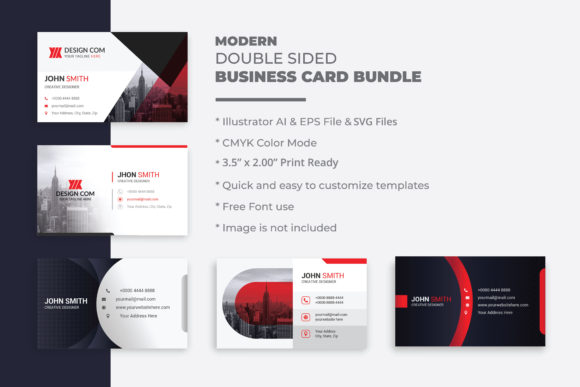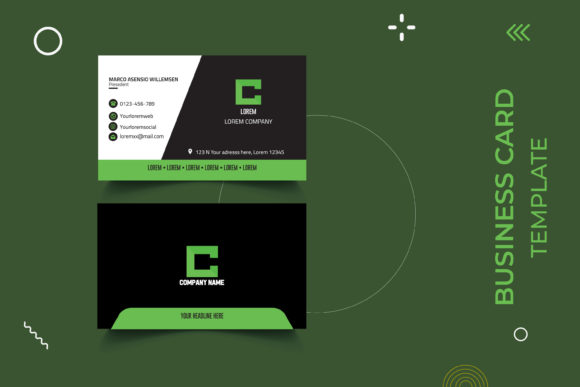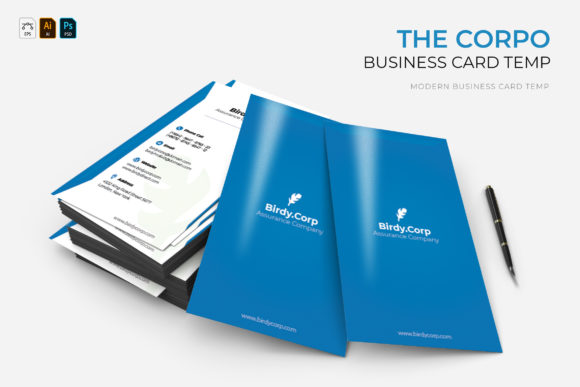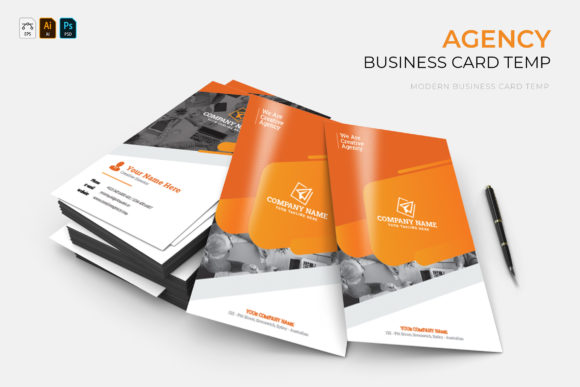
Simple Card Business Card: Designed for Real Work, Not Just First Impressions
In today’s fast-paced professional landscape, a business card is no longer just a piece of paper handed out at networking events. It’s a micro-portfolio — a tactile extension of your brand identity, credibility, and attention to detail. Yet many professionals still wrestle with outdated templates, inflexible design tools, or expensive custom work that delays launch by days — or weeks. Enter Simple Card Business Card: a thoughtfully built resource for people who need polished, print-ready cards without the friction.
What Makes Simple Card Business Card Different?
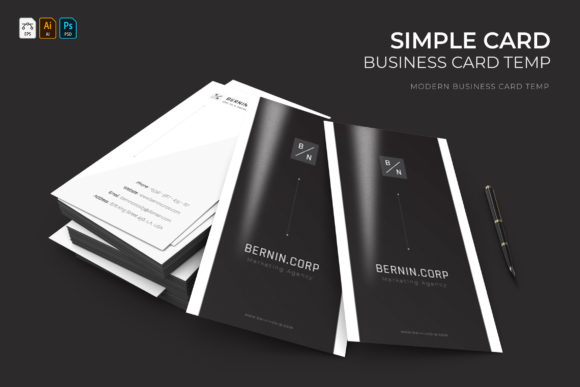
At its core, Simple Card Business Card is a collection of fully editable design files — delivered in AI (Adobe Illustrator), EPS, and PSD formats — built for practicality first. Each template arrives with well-organized layers, CMYK color mode, and 300 DPI resolution, ensuring crisp output whether you’re printing locally, using an online service like Vistaprint or Moo, or handing files directly to a commercial printer.
Unlike generic stock templates buried under locked layers or confusing layer groups, these files are structured intuitively. You can swap placeholder images in seconds, adjust background colors with one click, update typography using free fonts included in the package, and insert your contact details without hunting through nested groups. There’s no coding, no subscription, and no learning curve beyond basic familiarity with Adobe Creative Cloud apps.
Why Simplicity Is Strategic — Not Just Aesthetic
“Simple” in Simple Card Business Card doesn’t mean stripped-down or basic. It means *intentionally uncluttered*, *purpose-built*, and *human-centered*. Consider how workflows have shifted: freelancers now juggle client onboarding, content creation, and admin tasks across multiple platforms — often solo. Educators distribute contact info during parent-teacher conferences or academic conferences. Bloggers and creators share cards at live events or pop-up markets. In each case, time is finite, and visual consistency matters — but so does speed.
This aligns with broader creative trends: designers and non-designers alike are gravitating toward tools and assets that reduce decision fatigue while preserving control. The rise of “no-code” platforms, customizable Canva templates, and modular Figma kits reflects a market-wide preference for *structured flexibility*. Simple Card Business Card fits squarely within that shift — offering professional-grade layouts without demanding professional-grade time investment.
Designed for Real-World Printing Needs
Many digital-first templates fail at the final step: physical production. Colors shift, bleeds get cropped, fonts don’t embed, and low-resolution images pixelate. Simple Card Business Card avoids those pitfalls by default. All files use CMYK color profiles — the industry standard for offset and digital printing. The 300 DPI resolution ensures sharp text and clean image edges. Bleed and safe zones are clearly marked, and the README file walks users through common export settings for both desktop printers and professional services.
For example, a freelance graphic designer preparing for a local small-business fair can open the AI file, replace the placeholder headshot with their own high-res photo, adjust the accent color to match their website palette, and export a press-ready PDF — all in under 15 minutes. No font licensing concerns (free fonts are used and specified), no guesswork about trim margins, and no last-minute panic before the print deadline.
How It Fits Into Evolving Branding Habits
Branding isn’t what it was ten years ago. It’s less about rigid guidelines and more about adaptable expression — consistent tone, flexible visuals, and context-aware delivery. A photographer might use one version of their card for gallery openings (with a bold image-focused layout) and another for corporate workshops (cleaner, text-forward). An educator might switch between versions depending on whether they’re presenting at a STEM conference or leading a community workshop.
Simple Card Business Card supports that nuance. Because every file is layered and editable, users aren’t locked into a single look. Want to test a monochrome version? Swap the color scheme. Need a version optimized for accessibility? Adjust contrast and type size without breaking alignment. Prefer a minimalist variant for email signatures or digital sharing? Export a PNG with transparent background — no extra plugins needed.
Practical Customization — Without Compromise
The included file types serve distinct roles: AI and EPS for vector scalability (ideal for resizing logos or adapting to different card sizes), and PSD for raster-based edits (e.g., fine-tuning photo brightness or applying subtle filters). Layer organization follows logical groupings — “Logo,” “Contact Info,” “Background,” “Image Placeholder” — so even someone with intermediate design experience can navigate confidently.
Importantly, the templates avoid over-engineering. There are no hidden scripts, no proprietary plugins, and no reliance on cloud fonts. Everything works offline. That reliability matters — especially for users in regions with spotty internet access, or professionals who prefer to keep sensitive contact data off third-party platforms.
A Tool for Clarity, Not Just Decoration
Good business cards do three things well: communicate who you are, signal professionalism, and invite further connection. Simple Card Business Card helps achieve all three by removing barriers between idea and execution. When your time is spent refining your message — not troubleshooting layer visibility — your final output reflects intention, not compromise.
Take a small-business owner launching a new service: instead of waiting for a designer’s availability or settling for a templated online builder with limited export options, they can download the files, customize in under an hour, and send to print same-day. That immediacy builds momentum — and confidence.
What’s Included — And What’s Not
The package delivers exactly what’s needed to move from concept to printed card: AI, EPS, and PSD files; a clear README with setup tips and export guidance; and documentation on the free fonts used. Notably, stock images are excluded — a deliberate choice. It encourages users to insert authentic, relevant visuals (their own logo, headshot, or brand photography), reinforcing authenticity over generic filler.
This omission also respects user autonomy. You decide which image best represents your current work — whether that’s a recent project photo, a studio portrait, or even an abstract pattern tied to your brand voice. The placeholder exists only as a guide, not a constraint.
Who Benefits Most — And Why
Freelancers gain agility: updating cards after a rebrand or service expansion takes minutes, not hours. Educators and nonprofit staff get affordable, dignified materials for outreach without requiring internal design support. Bloggers and podcasters find a tangible way to extend their digital presence — something fans can hold, pin to a bulletin board, or pass along organically. Even hobbyists launching side projects — from handmade ceramics to neighborhood tutoring — benefit from having a credible, cohesive touchpoint.
It’s not about replacing professional design. It’s about lowering the threshold for quality — making strong visual communication accessible, repeatable, and sustainable across changing needs.
Getting Started Is the Easiest Part
There’s no trial period, no feature gating, no monthly fee. Once downloaded, the files belong to you — editable, reusable, and adaptable across projects. Whether you’re ordering 50 cards for a weekend event or 500 for a national conference, the foundation stays consistent. That continuity reinforces recognition — and trust.
And because the templates include thoughtful spacing, balanced typography, and intentional hierarchy, even users with minimal design experience produce results that feel considered — not assembled.
Cheers to Practical Professionalism
Business cards may seem like a small detail — but they’re often the first physical artifact people associate with your work. They reflect your standards, your clarity, and your respect for others’ time. Simple Card Business Card meets that responsibility with quiet competence: no fanfare, no fluff, just reliable, adaptable, print-ready design — ready when you are.